Mirror Mirror on the Wall…
I caught myself doing it again last week.
Stepping in.
Tidying something up that wasn’t quite right.
Rewriting a message so it landed better.
Picking up a piece of work that wasn’t technically mine… but would just be easier if I did it.
No one explicitly asked me to.
No one said, “Claire, can you just…”
And yet there I was, just… doing it.
It’s efficient.
It’s helpful.
It keeps things moving.
And if I’m honest, I’m pretty bloody good at it. So why wouldn’t I?
Which is probably the problem.
Because later that same day, I found myself in a conversation about how things aren’t working.
Too many plates spinning.
Too many loose ends.
Too many things sitting with the same people.
And there was this moment when the penny dropped (a bit harder than I’d of liked).
I say I want things to change.
And yet… I keep making sure they don’t.
There’s a version of this conversation happening everywhere.
Workload is too high.
Expectations are unrealistic.
Communication is messy.
People are stretched.
All of it is true.
And still nothing really shifts. Not in any meaningful, sustained way.
Because the system, for all its flaws, continues to function. Not perfectly, but well enough.
And “well enough” is where things get stuck.
Take a deep breath, because this might hurt
The system doesn’t hold itself together. We hold it.
Every time something gets quietly fixed.
Every time a gap is filled before anyone notices it’s there.
Every time pressure is absorbed so no one else has to feel it.
The meeting still happens.
The work still gets done.
The message still lands.
The wheels keep turning.
From the outside, it looks like things are working. So from the system’s point of view… they are. The ducks continue to glide serenely across the water.
This is where your mirror comes in.
Instead of asking what’s wrong with the system, ask what your role is in keeping it going.
In the small, consistent, almost invisible ways that don’t feel like a big deal at the time.
Step in.
Sort it.
Move on.
Repeat.
There’s a systems thinking archetype called shifting the burden. I’ve talked about it before.
Something doesn’t work. A quick fix gets applied. The immediate issue disappears.
And the underlying problem; the one that actually needs attention, stays exactly where it is. Over time, the system gets very good at relying on the fix and the fixer. And very bad at addressing the thing that keeps creating the problem in the first place.
Over-functioning fits this pattern perfectly.
It solves the problem in front of you, keeps things moving, stops things from falling apart. But it quietly guarantees that nothing fundamentally changes.
This shows up in very predictable ways.
The same people step in.
The same people carry.
The same people smooth things over.
In many organisations, in many schools, those people are women.
Capable. Reliable. Trusted.
The ones who “just get things done.”
It looks like strength.
And it is.
But strength, used this way, comes at a cost.

Every time you step in, you remove the strain that might have forced the system to adjust. Yet, if the system never feels the strain, it has no reason to change.
But stopping feels harder than continuing. Letting something wobble feels irresponsible. Watching something not quite work when you could fix it in five minutes feels… wrong.
So you step in.
Again.
And nothing changes.
See the pattern?
Patterns that are learned, reinforced, and repeated.
Patterns that, over time, become the problem.
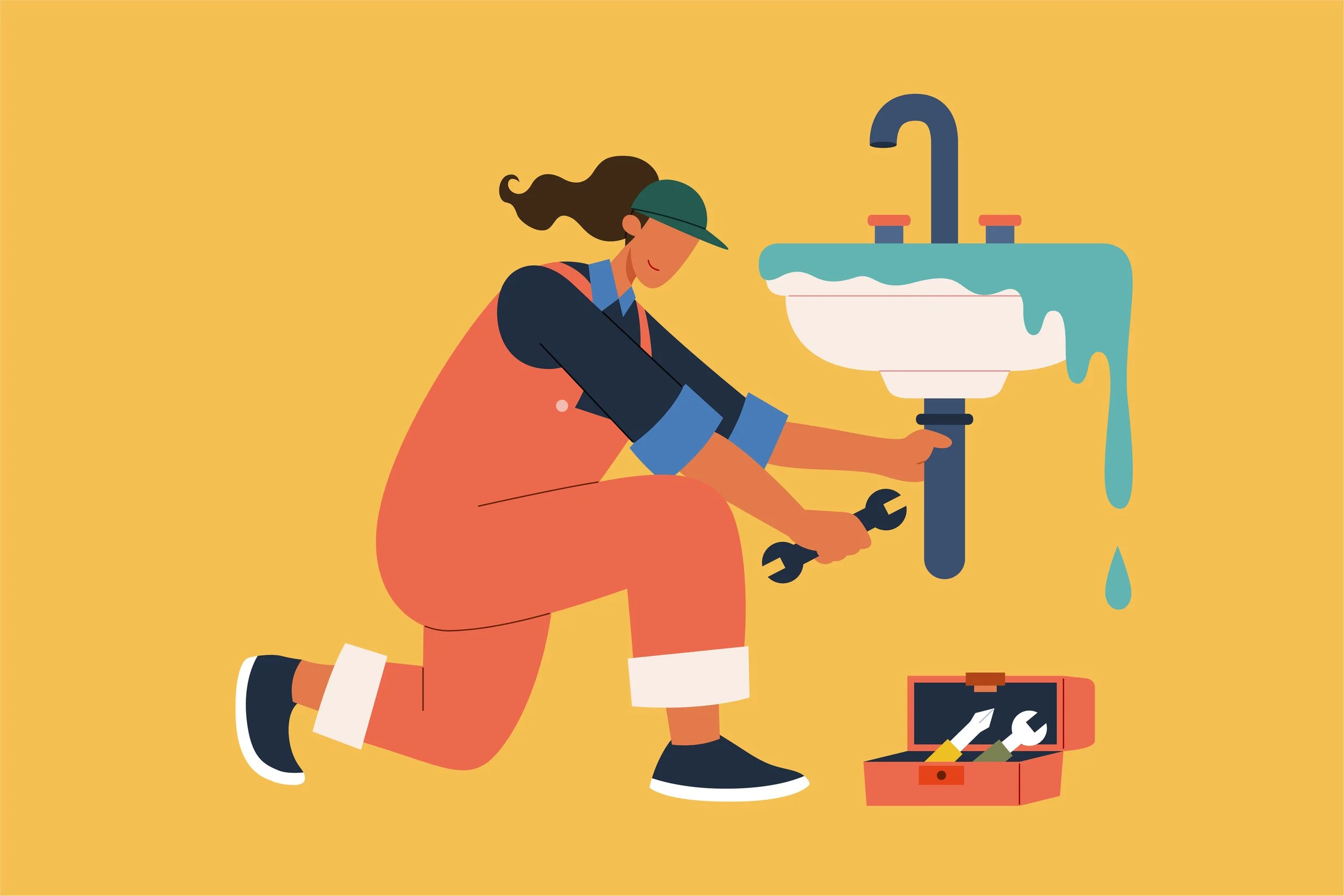
This is where leadership gets uncomfortable. Women leaders have long thrived in their ability to intervene, pick something up, and fix. Maybe we should have all been emergency plumbers rather than educators?
If we stick with that analogy, the consequences become clear. We fear that if we don’t patch up the pipe, the ceiling might just fall in.
That’s a very big, costly and uncomfortable problem. Not something we can just say, well, let’s see if someone else steps in to fix that. Or, I see the fixer doesn’t have the skills or knowledge to fix it, but I’ll leave them to figure it out.
Shifting the burden is a call to ask, where the hell did this leak really start and what happens when we look at that rather than patching it up? Now that’s time consuming. Perhaps even more costly than inaction. We know that. So we keep flying in to apply the first aid.
But you can’t change a system you refuse to see yourself in.
And once you see it, you can’t unsee it.
So, where to even start?
Catch yourself in the act.
Not after. Not in reflection.
In the moment you’re about to step in.
Don’t fix the first thing you see.
You can. You’re good at it.
That’s not the point.
Leave one thing undone.
Small enough to be safe.
Obvious enough that someone else has to notice.
Stop smoothing everything.
If it always looks like it’s working, no one asks why it isn’t.
Ask a better question.
Not: how do I fix this?
But: why does this keep needing to be fixed? and why is it always me?
Watch what happens next.
Who steps in.
Who doesn’t.
What gets exposed.
That’s your system.
Most systems don’t need more effort. They need less rescue. Put down the waterproof tape.